Tired of waiting weeks to see if your creative automotive concept is actually buildable? The historic divide between creative design and engineering feasibility has long been the ultimate bottleneck in vehicle development. At the recent AIF26 Design Studio Keynote in Darmstadt, Autodesk laid out a bold vision to bridge this gap once and for all .
The core theme of the event was simple: “speed with confidence.” As Marek Trawny, Director of Product Management, explained, compressing vehicle development cycles cannot come at the expense of design quality . By embedding predictive AI, hybrid modeling, and open automation directly into Alias 2027 and VRED 2027, designers can now build production-ready geometry in record time .
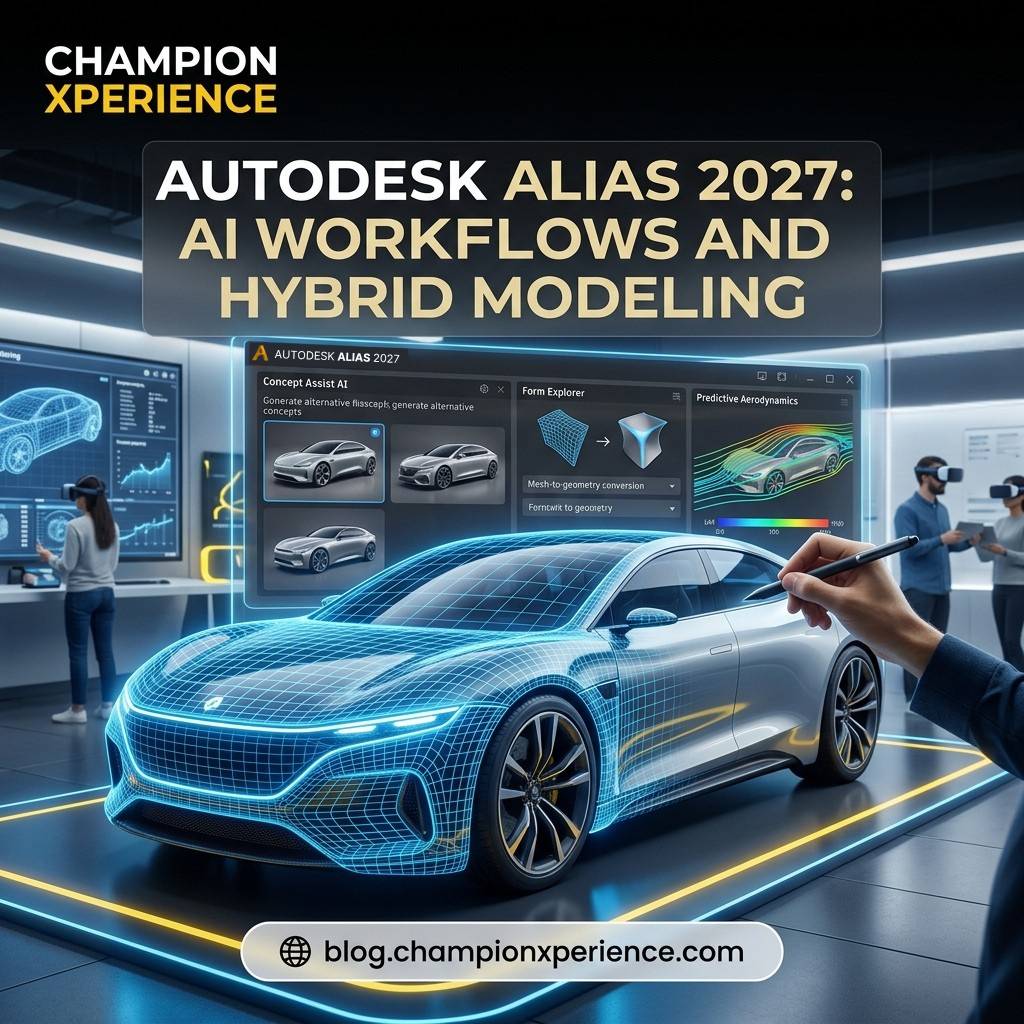
The leap from a rough 2D sketch to a 3D model is often where creative momentum stalls. Product Manager Timo Gmeiner demonstrated how new tools maintain design continuity and proportion while moving at breakneck speed . Using Paint Layers in Alias, designers can mark up and iterate on sketches directly within the workspace .

This is where the new AI-powered plugins step in. Concept Assist acts as an intelligent generator, transforming marked-up sketches into photorealistic images and generating consistent multi-angle views in seconds . Next, Form Explorer converts these aligned views into 3D meshes, ready for downstream subdivision modeling . To prevent AI-generated drift from warping your proportions, the Transformer Rig keeps the geometry honest, while a new region selector in Alias Retopo speeds up mesh-to-subdivision workflows by up to 10x .
The real magic of Alias 2027 lies in its hybrid modeling capabilities. Senior Product Manager Brandon Tasker highlighted how the software lets designers explore forms with the speed of SubD (Subdivision) modeling while outputting the high-quality NURBS surfaces required by engineering .
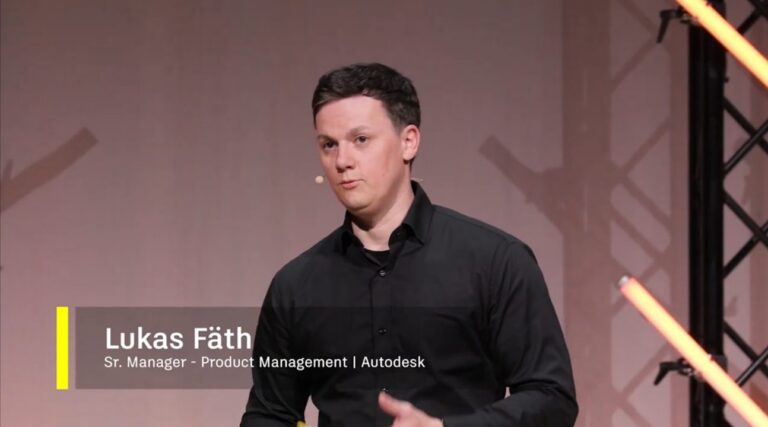
A standout feature is Variable Crease, which allows modelers to adjust an edge radius non-destructively simply by sliding a value . What used to take hours of manual rebuilding is now completed in seconds, outputting clean NURBS surfaces . Additionally, Surface Combine enables designers to build production-quality NURBS directly on top of live SubD geometry, ensuring that the final engineering surfaces update dynamically as the creative design evolves .
Perhaps the most celebrated announcement at AIF26 was the opening of the Alias platform through a brand-new Python API . Historically, the API was difficult to access, but the new Python interface—now available in technical preview—democratizes automation for every studio .
Designers can now automate tedious data preparation tasks, such as restructuring messy default layers, unifying surface normals, or stitching and meshing entire datasets in seconds . For those who do not write code, the natural-language Autodesk Assistant brings this same power to everyday designers . Simply ask the assistant to “move all curves to a new layer” or “stitch every shader’s surfaces,” and the tool executes the command instantly via the API .
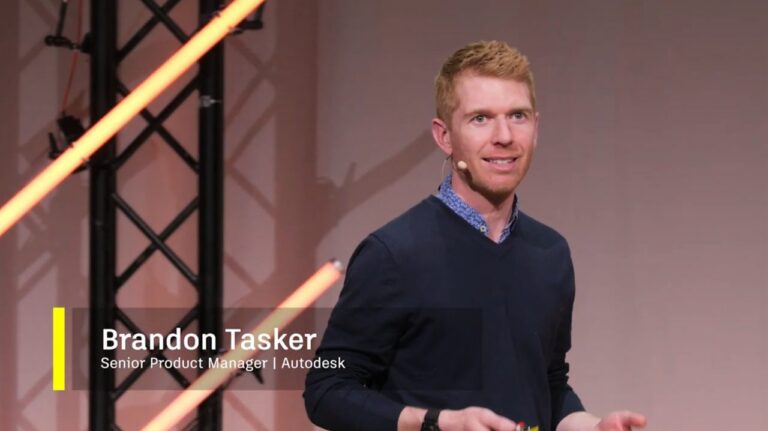
Decisions shape projects, and VRED 2027 is designed to accelerate those decisions with high-fidelity visualization . Senior Product Manager Lukas Fäth showcased an AI-augmented visualization stack featuring Image Assist, Asset Assist, and Video Assist, which generate immersive 3D environments and motion graphics in a fraction of the traditional time . With the integration of Gaussian Splatting, stakeholders can put on a headset and step directly into a photorealistic scene .
Reviewing these digital twins has also become entirely collaborative. VRED now supports a free Apple Vision Pro app, allowing design teams, executives, and engineers to join the same synchronized virtual room from anywhere in the world . Real-time physics simulation even lets reviewers test functional mechanics—like opening a door or hood—directly inside the VR review session .
Historically, aerodynamic and performance feedback came late in the design cycle, often forcing painful aesthetic compromises. Senior Product Manager Jakob Lohse introduced NavPack, a predictive AI design plugin that brings simulation-like feedback directly into the early design phase .
Using AI trained on actual simulation data, NavPack provides real-time aerodynamic feedback as designers sculpt NURBS or SubD models . To ensure reliability, the plugin includes a built-in trustworthiness check and can even suggest geometry variations to optimize drag while preserving the original design intent .
To see how these advancements redefine the studio workflow, let’s look at the key differences:
| Workflow Phase | Traditional Automotive Design | Autodesk Alias & VRED 2027 Workflow |
| Sketch to 3D Mesh | Manual rebuilding of 2D sketches into 3D meshes over weeks. | Concept AssistandForm Explorergenerate 3D meshes in minutes. |
| Edge Adjustments | Destructive rebuilding of NURBS surfaces to change edge radii. | Non-destructiveVariable Creaseadjustments in real time. |
| Data Prep & Layering | Hours of manual file cleanup, layer organization, and stitching. | Automated via thePython APIandAutodesk Assistant. |
| Aerodynamic Testing | Late-stage engineering handoff leading to design rework. | Upstream, real-time feedback using theNavPackpredictive AI plugin. |
| Collaborative Review | Physical mockups or static presentations with delayed feedback. | Immersive, multi-device digital twins viaApple Vision ProandVRED. |
Ultimately, these tools are not about replacing human creativity; they are about liberating it. By automating repetitive prep work and providing instant engineering feedback, designers can spend their time on what truly matters: vision, taste, and the craft of great design .
Which of these new features are you most excited to bring into your design studio? Will the new Python API change how you manage your data prep?