Imagine the ultimate engineering shortcut: predicting complex product performance in seconds rather than spending weeks setting up physical test campaigns. That is the massive promise of artificial intelligence and machine learning in modern manufacturing. But if you have ever tried to feed historical test data into a neural network, you already know the harsh reality. AI models are incredibly sensitive; they cannot distinguish between a genuine physical phenomenon and a faulty sensor. They simply learn both.
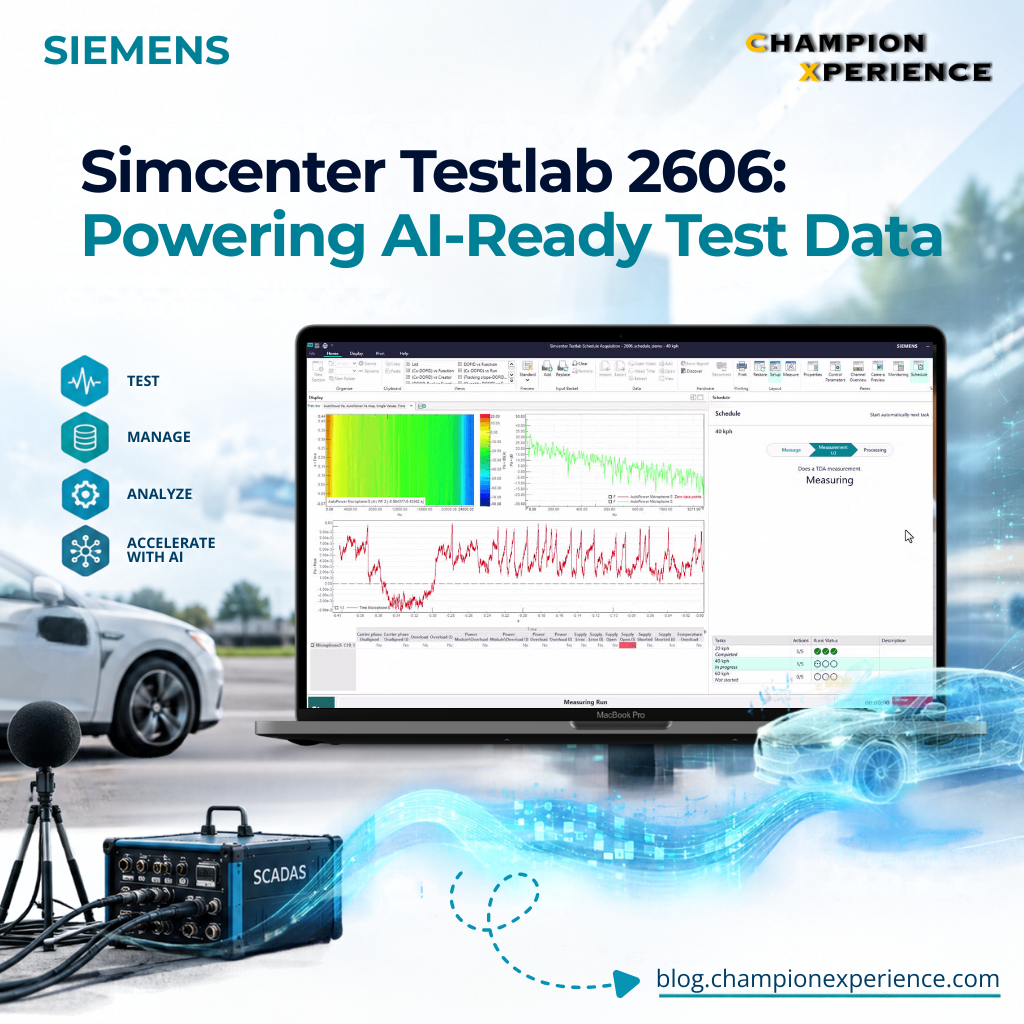
Historically, we captured test data to answer highly specific, isolated engineering questions—not to train machine learning models. This has left data scientists and test engineers spending up to 80% of their time manually cleaning, labeling, and validating legacy datasets. With the release of Simcenter Testlab 2606, Siemens is addressing this exact bottleneck by introducing a unified, AI-ready data workflow that bridges the gap between physical testing and machine learning.
When we talk about deploying AI in noise, vibration, and harshness (NVH) or dynamic environmental testing, the bottleneck is rarely the machine learning algorithms themselves. The real challenge is the data. If your training data lacks consistency, traceability, or proper annotation, your AI model will generate unreliable predictions.
To solve this, Simcenter Testlab 2606 focuses on transforming raw physical measurements into structured, trusted, and reusable digital assets. By establishing a connected pipeline from the sensor to the AI training platform, engineering teams can eliminate manual data-cleaning bottlenecks and accelerate their design cycles.
Siemens has outlined seven critical pillars that test data must satisfy to be considered truly “AI-ready.” Let us break down how the latest software release delivers on each of these requirements.
An AI model will happily learn sensor drift, loose accelerometer signals, or clipped channels as if they were real physical behaviors. High-quality data acquisition hardware is your first line of defense. Utilizing Simcenter SCADAS hardware ensures signal integrity directly at the point of measurement. It embeds critical metadata—such as channel overloads, sensor connectivity, and calibration records—directly into the data files, ensuring your training inputs are fundamentally trustworthy.
Are your saved files actually correct, or did someone simply hit save on a bad run? Manually validating hours of time-series data is a tedious process. Within Simcenter Testlab Neo, the Process Designer automates the validation of time data, block results, and single values. By automatically checking block data against target curves or specific threshold levels, the system flags anomalies before they ever reach your data science team.
An unlabeled dataset is useless to a machine learning model. If you cannot instantly identify the vehicle configuration, operating conditions, or test environment of a specific run, you cannot use it for training. The built-in Simcenter Descriptive Data Model And Template Editor solves this by helping you design ASAM-compliant annotation models. You can pre-populate up to 90% of these metadata labels before the test campaign even begins, leaving only real-time variables (like weather conditions) to be filled out on-site.
To train a reliable neural network, your datasets must be consistent across different campaigns. If different operators use varying procedures, the resulting data cannot be easily compared. The new Schedule Acquisition workbook in Simcenter Testlab Neo automates and standardizes your entire measurement campaign. It guides operators step-by-step through instrumentation, execution, and reporting, ensuring every test is run under identical conditions.
Physical prototypes are expensive, and test teams are constantly pressured to run fewer physical tests. However, AI models require vast quantities of data. To bridge this gap, Simcenter Testlab 2606 allows you to complement physical measurements with high-fidelity simulated data. By leveraging Component-Based Transfer Path Analysis (C-TPA) and virtual prototype assembly, you can generate synthetic datasets to fill critical data gaps and expand your training library.
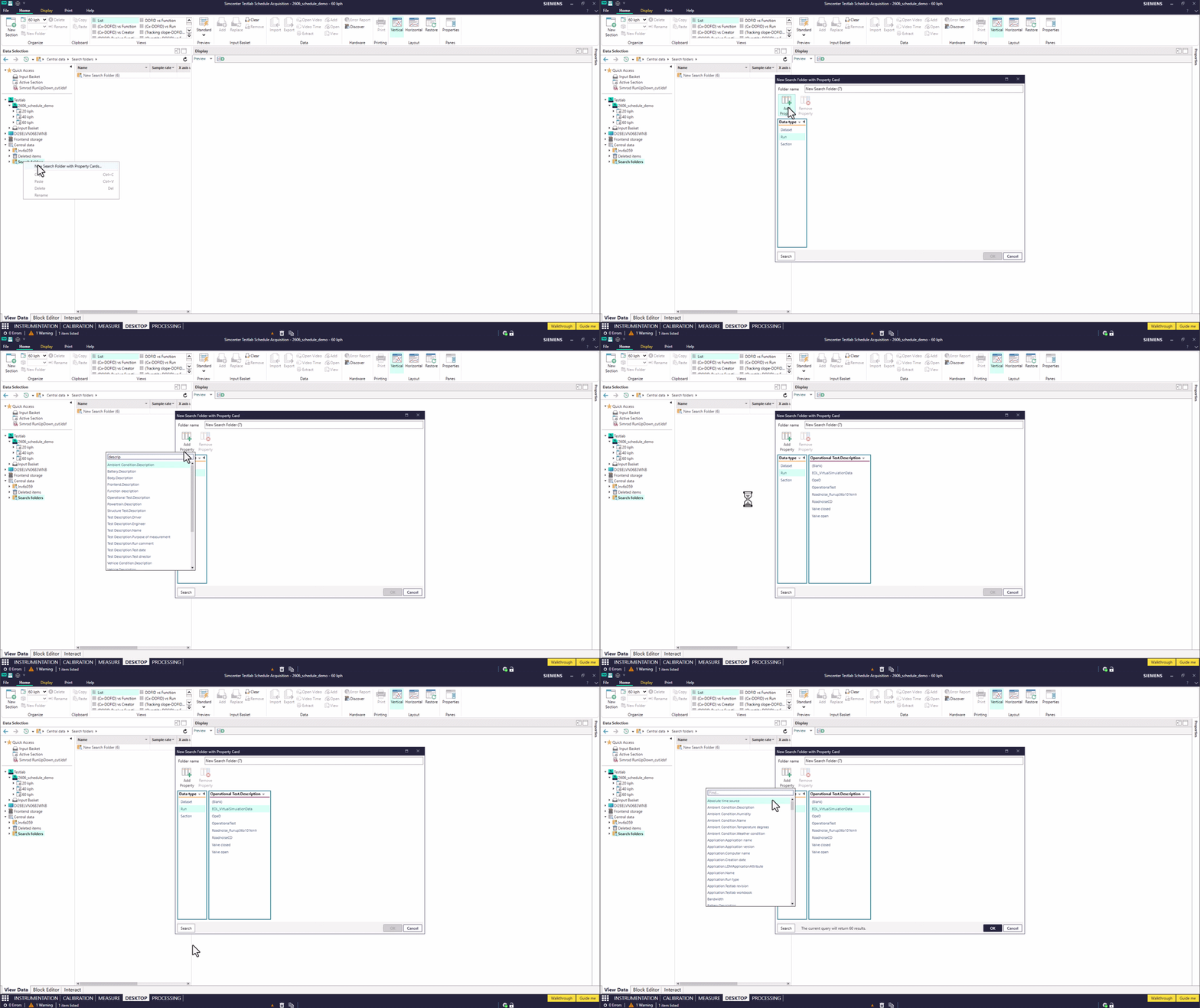
Data scientists should not have to hunt down test results via email or chat messages. Simcenter Testlab Data Management provides a centrally deployed, ASAM-ODS-compliant database. This centralized repository allows teams to instantly search, filter, and retrieve historical NVH test data across different departments and global sites.
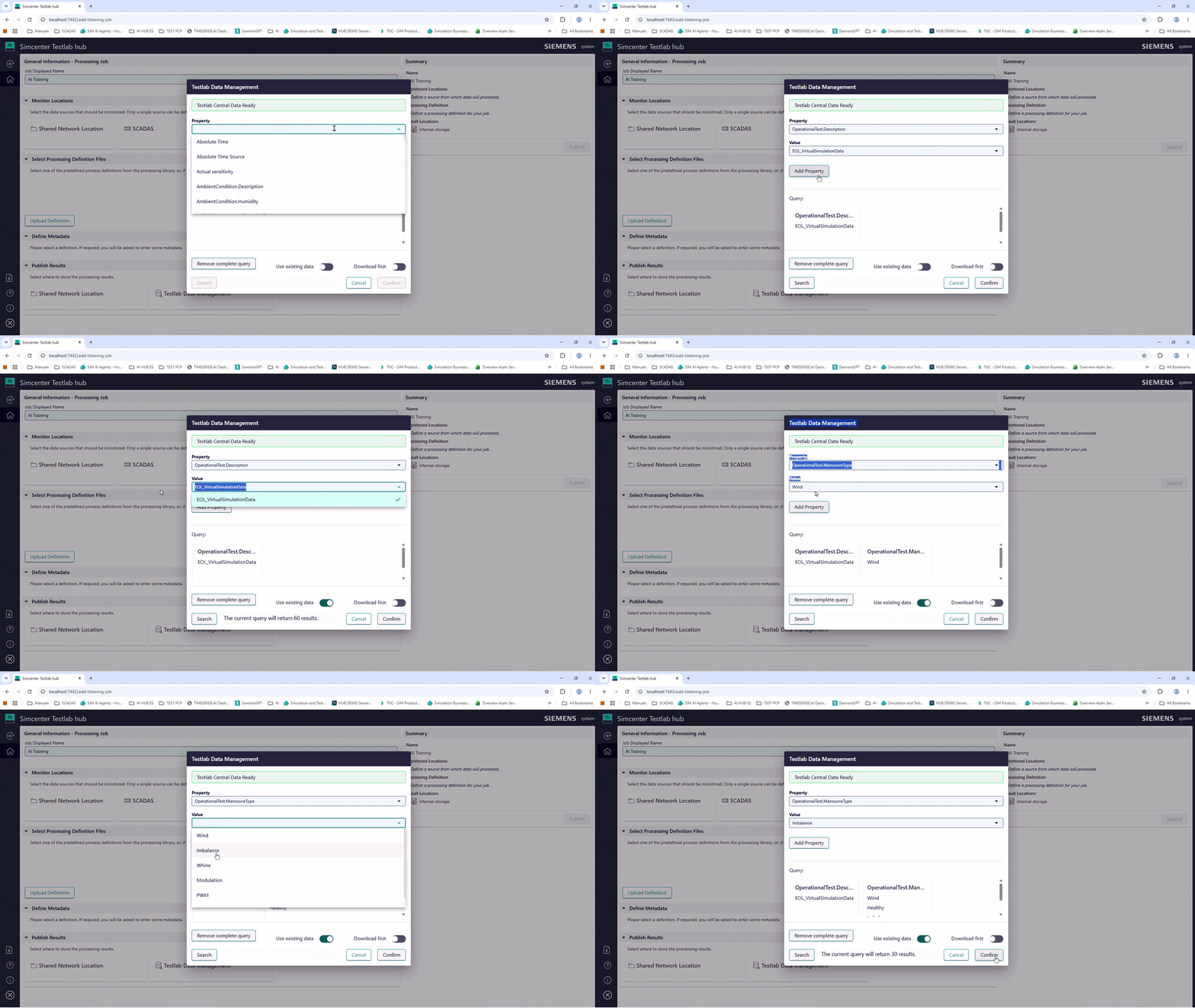
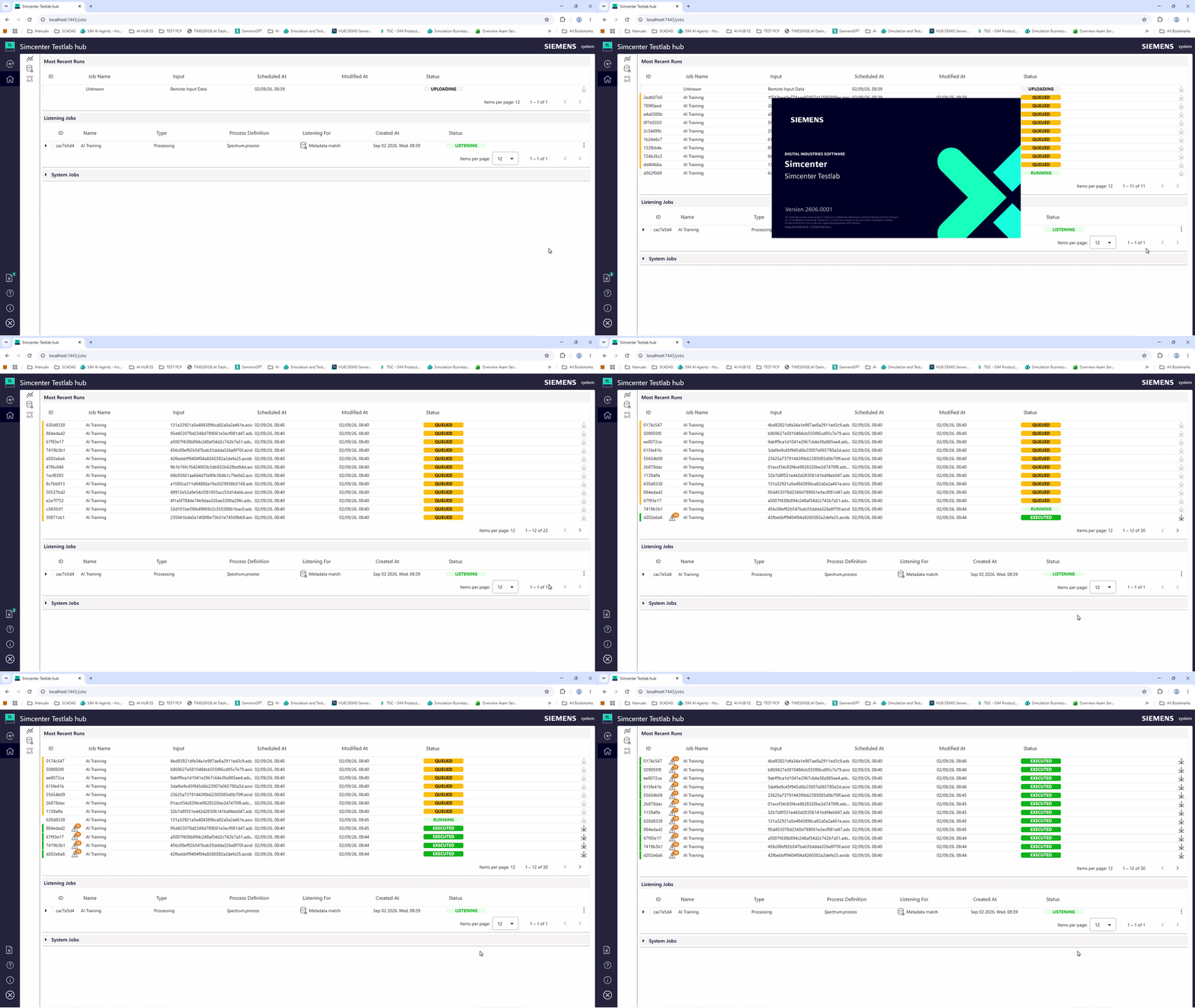
The final step is connecting your curated data directly to your machine learning environment. Simcenter Testlab Workflow Automation (TWA) has been upgraded to search and process data stored directly within your centralized database. You can define a search query—such as retrieving all hybrid vehicle measurements taken on a specific proving ground—and the system will automatically extract, process, and export the data directly into AI platforms like RapidMiner AI Studio.
To understand the practical impact of these updates, let us compare how test data is managed in a traditional testing environment versus the automated workflow of the 2606 release.
| Data Challenge | Traditional Testing Workflow | Simcenter Testlab 2606 Workflow |
| Data Quality | Manual logbooks; sensor faults often go unnoticed until post-processing. | Simcenter SCADASembeds signal integrity and calibration data directly. |
| Validation | Time-consuming manual inspection of individual time histories. | Automated validation of time and block data viaProcess Designer. |
| Metadata Labeling | Inconsistent naming conventions and scattered Excel sheets. | ASAM-compliant, pre-populated templates viaDescriptive Data Model. |
| Campaign Execution | Operator-dependent procedures leading to inconsistent datasets. | Guided, automated testing campaigns usingSchedule Acquisition. |
| Data Pipeline | Manual file transfers, email requests, and custom formatting scripts. | Direct database search and automated export toRapidMiner AI Studio. |
By integrating physical testing with virtual simulation and machine learning, engineering departments can achieve up to 60% greater workflow efficiency while gaining earlier insights into system-level performance . Whether you are de-risking spacecraft qualification through Virtual Shaker Testing or optimizing automotive NVH, the ability to generate structured, trusted, and reusable test data is a game-changer.
How is your engineering team currently handling the transition to machine learning? Are your data scientists still spending most of their time cleaning legacy files, or have you started automating your test data pipeline? Let us know your thoughts in the comments below!
This guide is based on insights from the official Siemens Blog.