Artificial intelligence is rapidly transforming how products are designed, engineered, simulated, and manufactured. As AI moves beyond software applications and into physical environments, the boundaries between computing, engineering, robotics, and industrial production are becoming increasingly interconnected.
Against this backdrop, NVIDIA GTC 2027 will return to San Jose, California, from March 15–18, 2027, bringing together developers, researchers, technology leaders, and industry innovators to explore the next generation of AI and accelerated computing.
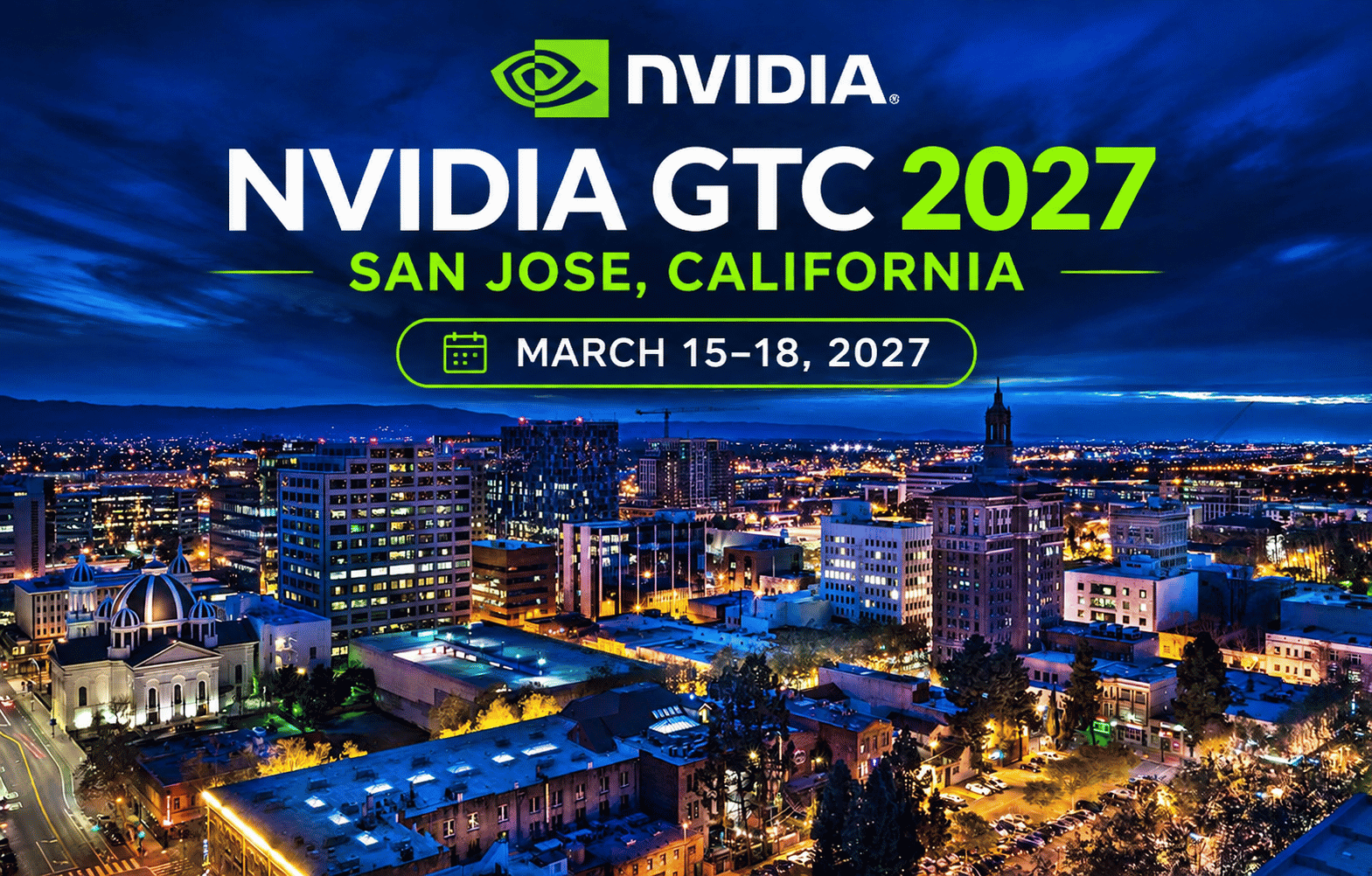
Organized by NVIDIA, the GPU Technology Conference (GTC) has become an important meeting point for the technologies shaping the future of computing. The 2027 edition will put particular emphasis on agentic AI, AI infrastructure, industrial AI, physical AI, robotics, and scientific computing.
For engineering and manufacturing industries, these developments could have significant implications for product development, simulation, automation, and digital transformation.
Highlights and Announcements
As we look ahead to NVIDIA GTC 2027, revisiting the 2026 keynote offers valuable insight into the technologies, innovations, and industry trends shaping the future of AI.
In his keynote, NVIDIA CEO Jensen Huang explored the latest developments in artificial intelligence, accelerated computing, robotics, and the evolving AI ecosystem.
Watch the NVIDIA GTC 2026 keynote below to discover the announcements and technology insights leading into GTC 2027.
NVIDIA GTC is more than a traditional technology conference. It brings together the hardware, software, research, and developer ecosystems driving advances in artificial intelligence.
The 2027 event is expected to explore how AI technologies are moving from experimentation into real-world applications, with a focus on scalable infrastructure, intelligent systems, and industry-specific solutions.
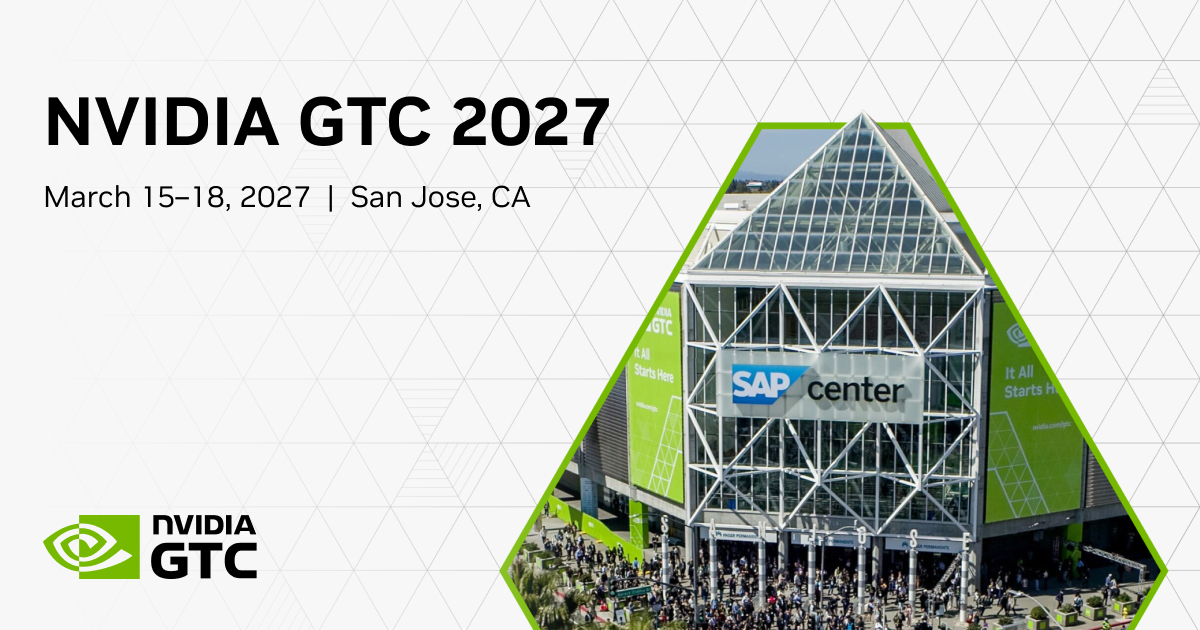
According to NVIDIA’s announced GTC 2027 themes, the conference will cover:
These topics reflect a broader shift toward AI systems that do more than generate information: they increasingly interact with the physical world and support complex industrial workflows.
One of the most relevant areas for engineering professionals is Industrial AI.
Manufacturing companies are increasingly exploring how artificial intelligence can improve production efficiency, reduce operational complexity, and accelerate product development.
From predictive maintenance and intelligent quality inspection to production optimization and automated engineering processes, AI is becoming an increasingly important part of industrial digitalization.
At GTC 2027, Industrial AI is expected to be a key area of discussion, particularly as manufacturers look to connect AI capabilities with existing industrial systems, operational data, and engineering applications.
For CAD, CAE, and PLM professionals, this evolution raises an important question: How can AI become an integrated part of the product development lifecycle rather than simply another standalone tool?
Potential applications include:
The opportunity is not simply to automate individual tasks, but to connect engineering decisions across the entire product lifecycle.
Another major theme of NVIDIA GTC 2027 is Physical AI.
While generative AI has primarily transformed digital workflows, Physical AI extends intelligent systems into real-world environments. This includes industrial robots, autonomous machines, humanoid robots, and intelligent manufacturing equipment.
NVIDIA’s technologies, including its robotics and simulation platforms, support the development of systems that can perceive their surroundings, understand physical environments, and perform increasingly complex tasks.
Simulation is particularly important in this process.
Before deploying robots in real manufacturing environments, engineers need to train, test, and validate their behavior under different conditions. Virtual environments can help simulate physical interactions, evaluate workflows, and reduce the need for extensive physical testing.
This creates new opportunities for engineering simulation, robotics development, and virtual commissioning.
For manufacturers, the convergence of AI, robotics, and simulation could help accelerate the development of more flexible and intelligent production environments.
Digital twins are becoming an increasingly important component of industrial digital transformation.
By combining simulation, real-time data, and AI, digital twins allow organizations to create virtual representations of physical products, machines, and production systems.
NVIDIA Omniverse technologies provide a foundation for developing physically based virtual environments and connecting different industrial data sources.
For engineering teams, these capabilities open possibilities for:
The combination of AI and digital twins could also help organizations move toward more autonomous engineering and manufacturing workflows.
Rather than relying exclusively on manual analysis and predefined processes, intelligent systems could help identify potential problems, evaluate alternatives, and support faster decision-making.
Behind these industrial applications is another critical development: the infrastructure required to train, deploy, and operate increasingly sophisticated AI models.
NVIDIA GTC 2027 will also explore AI infrastructure and accelerated computing, two areas that are central to the expansion of enterprise AI.
As AI workloads become more demanding, organizations need powerful computing platforms capable of handling large datasets, complex simulations, model training, and real-time inference.
GPU-accelerated computing plays an important role in this transformation.
For engineering applications, accelerated computing can support demanding workloads such as computational fluid dynamics (CFD), structural analysis, scientific simulation, visualization, and AI-assisted engineering.
The growing convergence of high-performance computing and artificial intelligence could also create new opportunities for engineering software developers and industrial technology providers.
For the engineering software ecosystem, NVIDIA GTC 2027 is particularly relevant because many of the technologies being developed around AI are directly connected to the future of product development.
CAD platforms are evolving toward more intelligent design environments. CAE applications are exploring AI-assisted simulation and optimization. PLM systems are increasingly incorporating AI to improve access to product information and support lifecycle decision-making.
These developments point toward a more connected engineering ecosystem in which AI can assist throughout the product lifecycle.
Some of the areas worth watching include:
AI-assisted engineering: Using AI to support design exploration, engineering analysis, and technical documentation.
Simulation acceleration: Combining GPU computing and AI techniques to improve demanding simulation workflows.
Autonomous engineering agents: Exploring AI agents that can interact with engineering applications and support complex technical tasks.
Digital manufacturing: Connecting product design, simulation, production planning, and factory operations.
Robotics and automation: Using simulation and AI to develop more adaptive industrial automation systems.
For technology providers, software developers, and manufacturers, these developments represent an opportunity to rethink how engineering processes are designed and executed.
NVIDIA GTC brings together several technology areas that are increasingly influencing the engineering and manufacturing industries.
For CAD, CAE, PLM, and manufacturing professionals, the conference offers an opportunity to follow developments in AI infrastructure, robotics, accelerated computing, and digital twins.
It is also an important event for understanding how technology companies are approaching the integration of AI into existing industrial workflows.
As AI capabilities continue to evolve, the next challenge will be turning technological breakthroughs into practical engineering and manufacturing applications.
NVIDIA GTC 2027 arrives at a time when artificial intelligence is moving into a new phase of industrial adoption.
Agentic AI, physical AI, accelerated computing, robotics, and digital twins are no longer isolated technology discussions. Together, they are contributing to a broader transformation in how industries design products, operate facilities, and manage complex engineering processes.
For the CAD, CAE, PLM, and manufacturing communities, the key question is how these technologies will translate into measurable improvements in productivity, innovation, and operational performance.
As the industry gathers in San Jose in March 2027, NVIDIA GTC will provide an important opportunity to explore these developments and understand what comes next for AI-powered engineering and manufacturing.
As AI workloads become increasingly demanding, powerful and scalable hardware is essential to supporting next-generation AI applications. Through its collaboration with NVIDIA, Dell Technologies provides enterprise AI infrastructure, including Dell PowerEdge servers and Dell AI Factory with NVIDIA, supporting AI development, accelerated computing, and large-scale deployment across engineering and manufacturing.
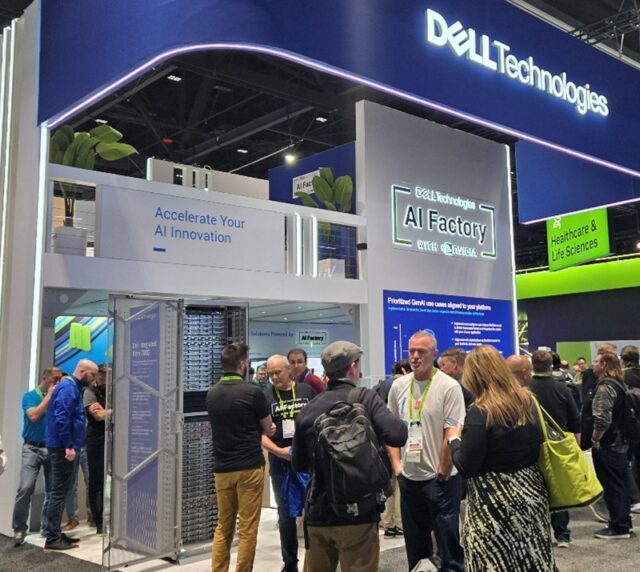
Dell Technologies will be present at NVIDIA GTC 2027 in San Jose! Visit the event to explore its latest AI infrastructure solutions and discover how Dell and NVIDIA are helping shape the future of AI-powered engineering and manufacturing. Come and take a closer look!
See you at NVIDIA GTC 2027 in San Jose!