

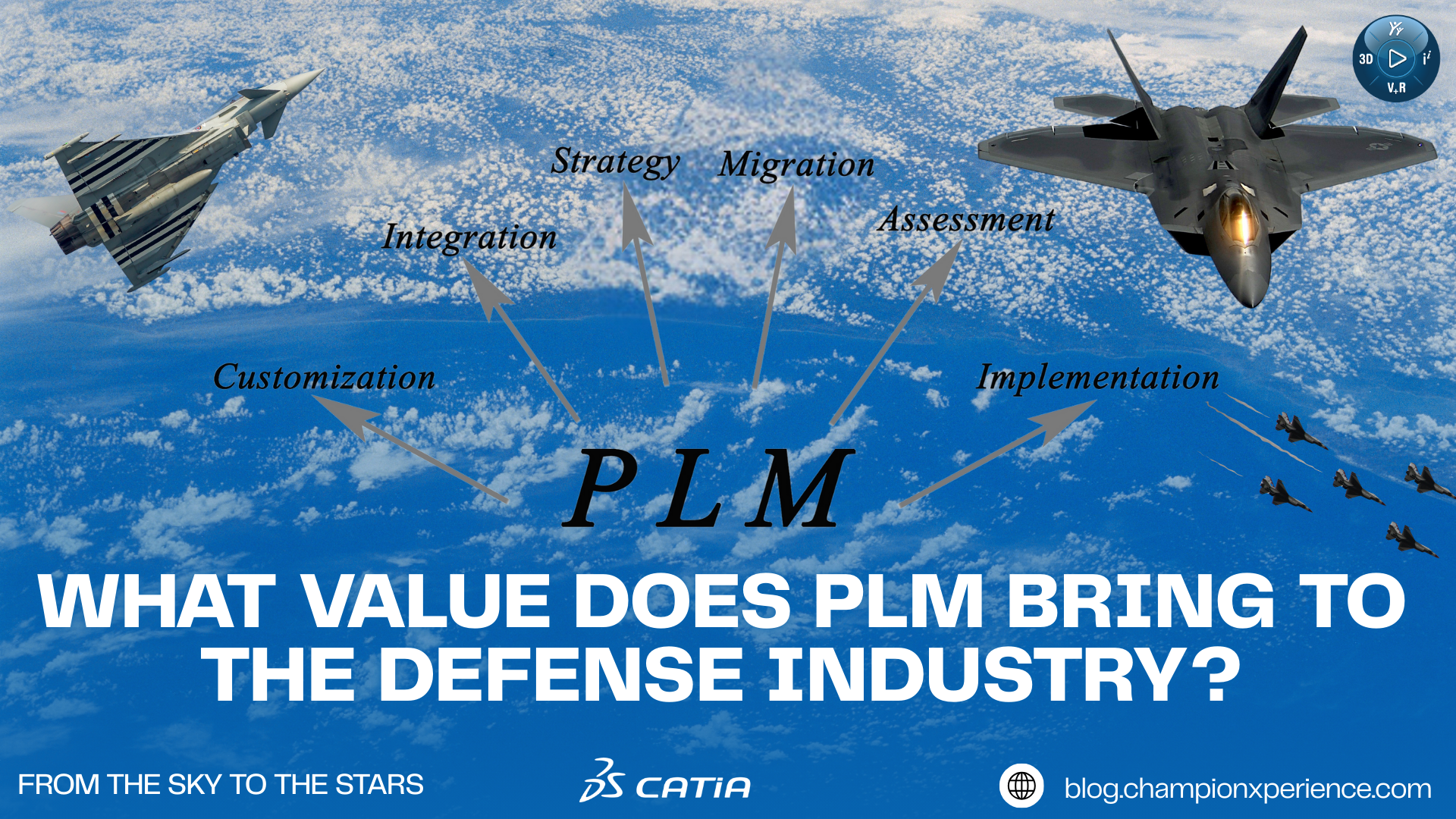
 In today’s defense sector, military equipment is becoming increasingly complex and the life cycles of defense products are longer than ever. This makes Product Lifecycle Management (PLM) a strategic necessity. PLM systems provide full oversight across a product’s lifecycle, from concept and design to production, operation, maintenance, and eventual decommissioning. For decision-makers in defense, this translates into better project control, reduced risks, and the ability to make informed decisions based on reliable data at every stage.
According to Grand View Research, the global PLM market in aerospace and defense is expected to exceed USD 18 billion by 2030, growing at a CAGR of 8.7 percent. This reflects widespread PLM adoption across the industry, from major defense corporations to armed forces around the world. The main driver of this growth is the increasing complexity of defense systems. Advanced fighter jets, naval vessels, and missile platforms are composed of thousands of components and subsystems. Without a unified PLM system, coordinating engineering work and logistics at this scale would be extremely challenging.
“As product development in A&D becomes increasingly complex, PLM provides a critical digital thread that ensures traceability, compliance, and real-time collaboration across teams and geographies.”
— Deloitte, PLM in Aerospace and Defense

Defense projects often involve extensive supply chains and multinational partnerships, especially in large joint development initiatives. In these cases, PLM acts as the integrative digital backbone, connecting all stakeholders through a standardized, up-to-date data environment.
Centralizing data and standardizing processes improves collaboration among contractors, suppliers, and allied forces. This enhances system interoperability across multinational defense ecosystems and gives decision-makers better control over project timelines and budgets. Potential production bottlenecks or delays can be identified early, avoiding costly issues later.
Because defense assets such as tanks or fighter aircraft often remain in service for decades, PLM is also critical for configuration management and modernization planning. Tracking every change, revision, and component version over time makes upgrades easier, prolongs operational life, and maintains reliability.
PLM is no longer just an engineering tool. Today, it serves as a strategic platform for knowledge and operations management and acts as the digital backbone for defense organizations. By integrating data from CAD, ERP, MES, IoT, and maintenance systems, PLM provides a single source of truth accessible across engineering, production, service, and compliance teams.
This connectivity allows organizations to make faster, better-informed decisions based on a complete technical and business context. In modern defense environments, PLM is essential for achieving operational and technological advantage. Key benefits of enterprise-grade PLM systems include:
Shorter development and certification cycles for new combat platforms
Secure management of sensitive and export-controlled data such as CUI and ITAR
Creation and management of digital threads and digital twins for defense systems
Long-term optimization of sustainment costs and logistics planning
Agile response to operational changes, retrofits, and upgrades
Improved combat readiness through better scheduling of maintenance, repairs, and modernization
“PLM is no longer optional. It is essential to surviving and thriving in a defense ecosystem shaped by complexity, compliance, and constant innovation.”
— Deloitte
At its core, Product Lifecycle Management focuses on managing product data. Efficient development and production depend on accurate and accessible information. When data is inconsistent or not transparent across teams, production can slow down or even halt. Platforms like 3DEXPERIENCE keep product data updated in real time and provide access to all team members, wherever they are.
PLM also covers requirements management, a dynamic process that continues throughout the entire product lifecycle. Digital tools allow teams to handle complex production demands while ensuring compliance, quality, and operational readiness.
Credit: CADCAM Group



Very interesting article, love the design as well!
ENOVIA integration with 3DExperience is a game changer.
This integration enables businesses to manage product data, streamline processes, and foster collaboration from product conception through design, manufacturing, and end-of-life. It provides core Product Data Management (PDM) functions, along with advanced capabilities for program management, quality and compliance, configuration management, and a digital hub for global teams to work together effectively.
Great job Filip and Hanen!!
Thanks! I completely agree, ENOVIA with 3DEXPERIENCE really makes collaboration and product data management so much easier. Glad you liked the article and design!
Very insightful article! 3DEXPERIENCE is definitely the future for business platforms and collaboration space.
Great blog!
Thank you, Sophia! I’m glad you found it insightful. 3DEXPERIENCE really is shaping the future of collaboration and business platforms!