

When a new version of a CAD software is released, I usually do not look only at the number of new features. As an engineer, I am more interested in what changes in the daily workflow. Does the software open models faster? Does regeneration take less time? Is it easier to work with large assemblies? Can repetitive modeling tasks be completed with fewer steps? And, most importantly, does the software feel faster when working on real engineering projects?
This is why ZW3D WuKong 2027 caught my attention. ZWSOFT describes WuKong as more than a normal version update. It introduces a new generation of parametric technology that focuses on performance, stability, scalability, and design flexibility. According to ZWSOFT, the new technology can provide up to 5× faster regeneration and 29% higher design efficiency. The company also highlights improvements for large assemblies, drawings, sheet metal, part design, and manufacturing.
In this article, I will explore the main improvements in ZW3D WuKong 2027, focusing on its new parametric technology, performance enhancements, and tools designed to make everyday engineering and manufacturing workflows more efficient.
For me, the most important change in WuKong 2027 is not a new modeling command. It is the new parametric technology behind the software.
In a parametric CAD system, every feature is connected to other features. When you change a dimension, modify a sketch, edit a feature, or change a component in an assembly, the software needs to calculate the effect of that change on the rest of the model. This can become more difficult as the model gets larger and the feature tree becomes more complex.
This is where performance becomes very important. When a model is small, waiting a few seconds for regeneration may not be a big problem. But when you work on a large mechanical part or assembly every day, repeated waiting can quickly become frustrating.
ZW3D WuKong 2027 introduces a new parametric architecture designed to make regeneration faster and more stable. ZWSOFT says the new technology can deliver up to 5× faster regeneration and 29% higher design efficiency. It is also designed to handle large and complex feature trees more efficiently.
For engineers, this can have a direct impact on the design process. Instead of waiting after every modification, you can make changes, regenerate the model, check the result, and continue working more quickly. This may sound like a small improvement, but during a full day of CAD work, these small improvements can save a significant amount of time.
Large assemblies are another important area of WuKong 2027.
When an assembly contains hundreds or thousands of components, performance becomes more important than simply having a large number of modeling features. Complex parts, subassemblies, patterns, references, and relationships can all affect how quickly the assembly opens and updates.
ZW3D WuKong 2027 includes improvements designed to make large assemblies faster to open and more reliable when changes are made. According to ZWSOFT, large assemblies can open up to 60% faster than mainstream 3D CAD solutions under its test conditions.
Of course, actual performance depends on the computer hardware, assembly structure, number of components, and model complexity.
To evaluate the improvements in a practical workflow, I tested a real assembly containing 4,000 components. I modified a hole position inside a subassembly, where the component was constrained to another part, and then regenerated the entire assembly. This allowed me to observe how WuKong 2027 handles dependent features, assembly constraints, and updates in a large, complex design.
With the new Automatic Fillet, ZW3D WuKong 2027 can automatically create multiple fillets in one operation. This can be useful when working on parts with many similar edges and can reduce the amount of manual selection required. You can also exclude specific edges or faces from the operation, giving you more control over the final result.
I like this type of improvement because it focuses on something engineers actually do every day. It is not about adding a completely new type of modeling. It is about making an existing workflow faster and reducing repetitive work.
Another useful addition is Neutral Chain Draft.
Ribs are very common in plastic and cast parts. They provide strength without requiring the entire part to be made thicker. However, applying draft to many ribs individually can take time.
With the new Neutral Chain Draft, you can apply draft to multiple ribs based on a continuous chain of lines or curves. The workflow involves selecting the continuous curve chain, choosing the draft face constrained to that chain, and selecting from four supported draft types.
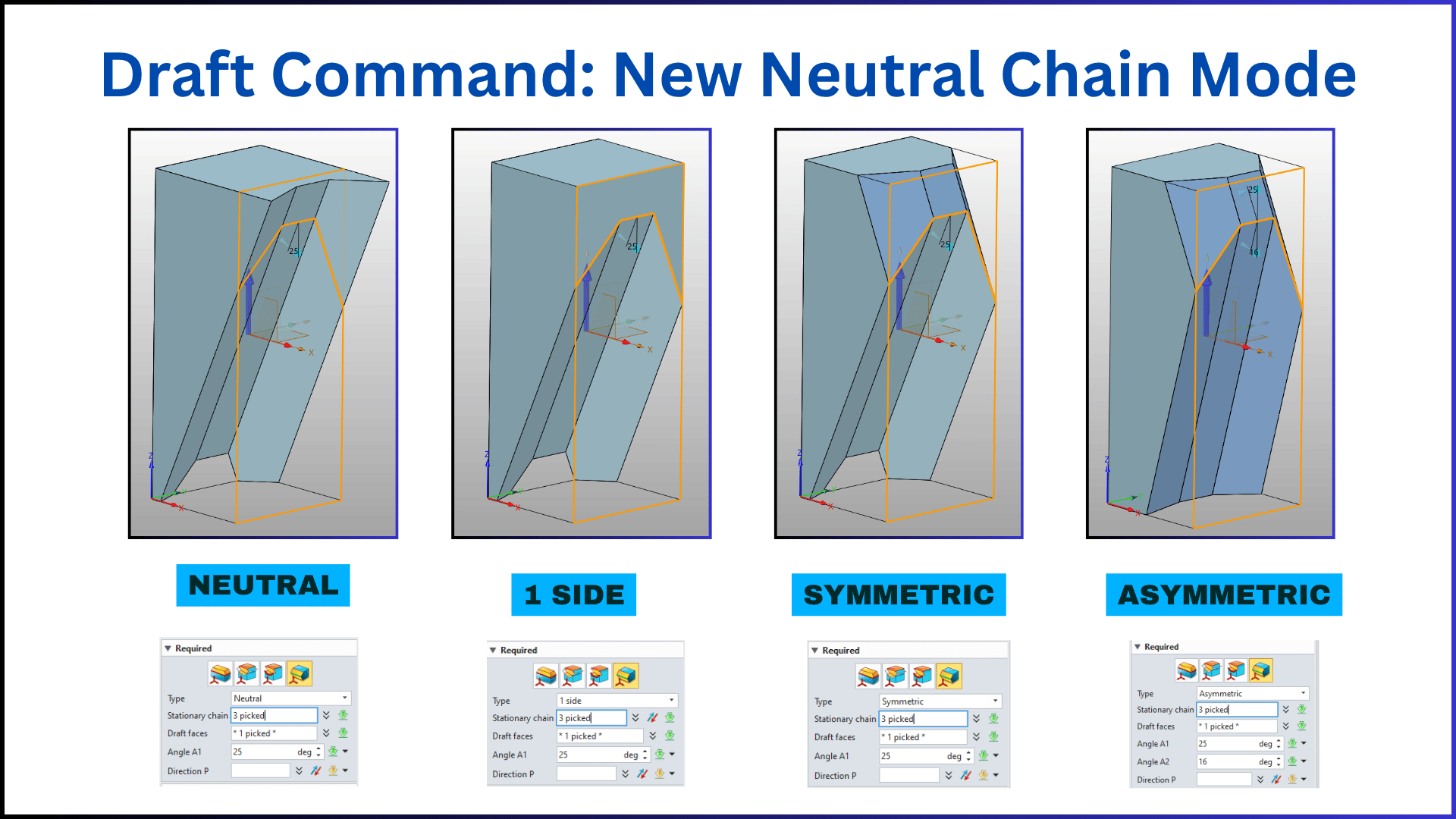
This gives designers more flexibility and helps simplify the drafting process when working with parts that contain multiple ribs.
For injection-molded and cast components, draft angles are essential for removing the finished part from the mold. By making it easier to apply draft across multiple features, Neutral Chain Draft can help reduce repetitive work and improve the efficiency of preparing parts for manufacturing.
Sheet metal also receives several interesting improvements in WuKong 2027.
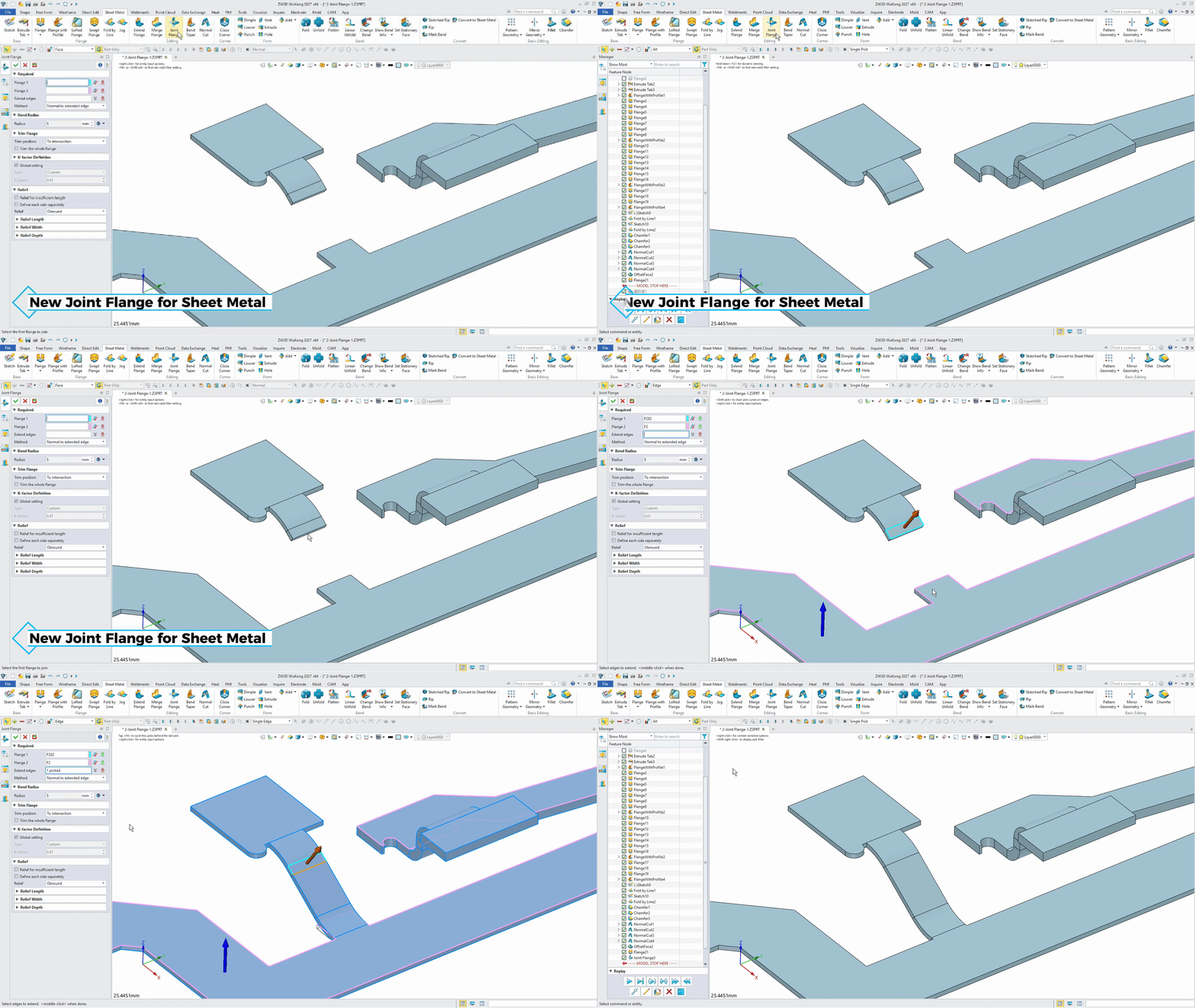
The new Joint Flange makes it possible to connect separate sheet metal shapes into one unified model. This can make it easier to create and align sheet metal components, especially when the design contains several connected shapes.
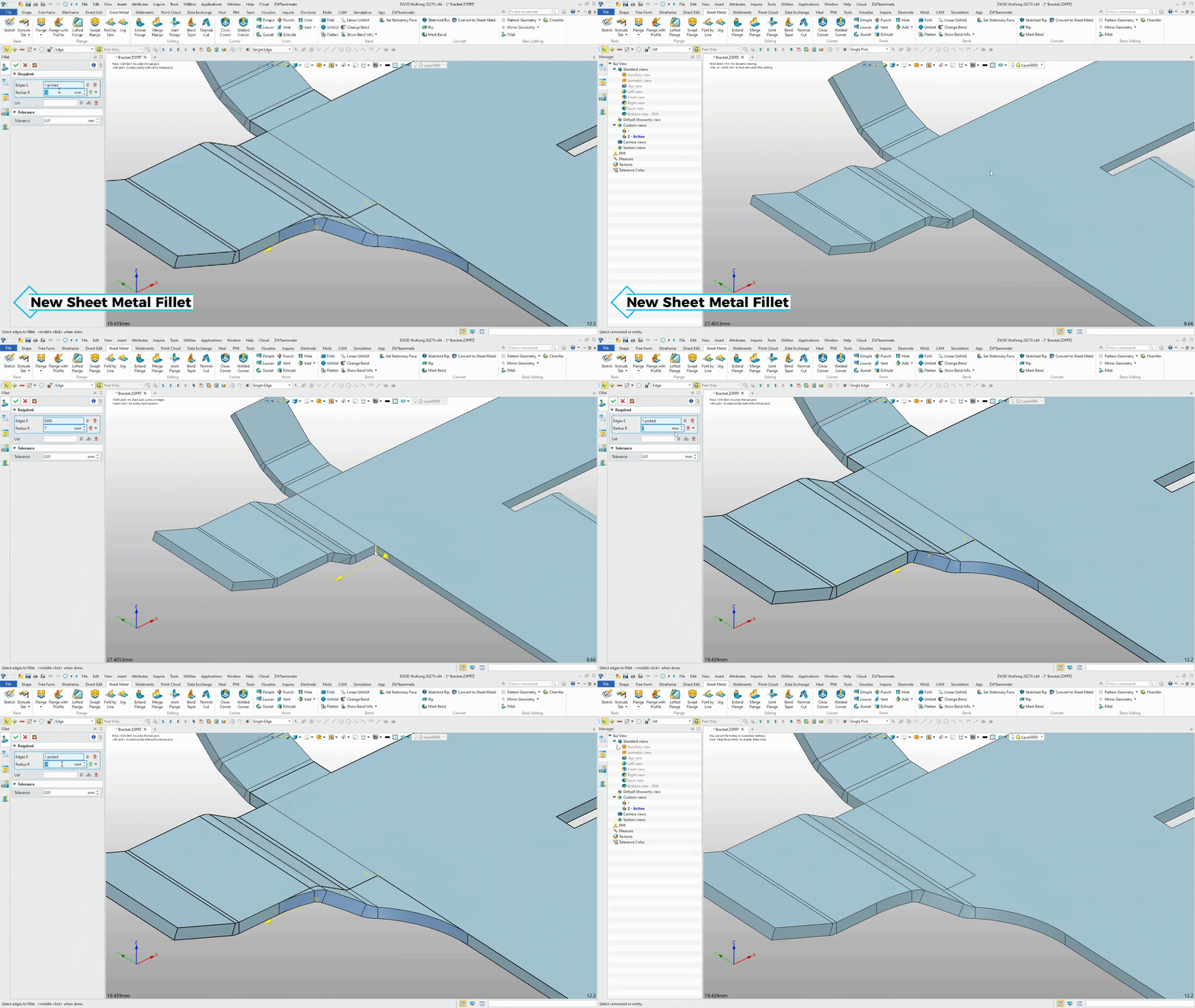
Another addition is Sheet Metal Fillet. This feature is designed to create cleaner flat-pattern profiles by avoiding unnecessary edges. This is important because the flat pattern is often used directly for manufacturing processes such as laser cutting or other sheet metal cutting operations.
WuKong 2027 also introduces Merge Flange. It allows separate sheet metal bodies to be merged while keeping the normal unfold and fold workflow. It also supports flange creation along spline edges, which gives designers more flexibility when creating complex sheet metal shapes.
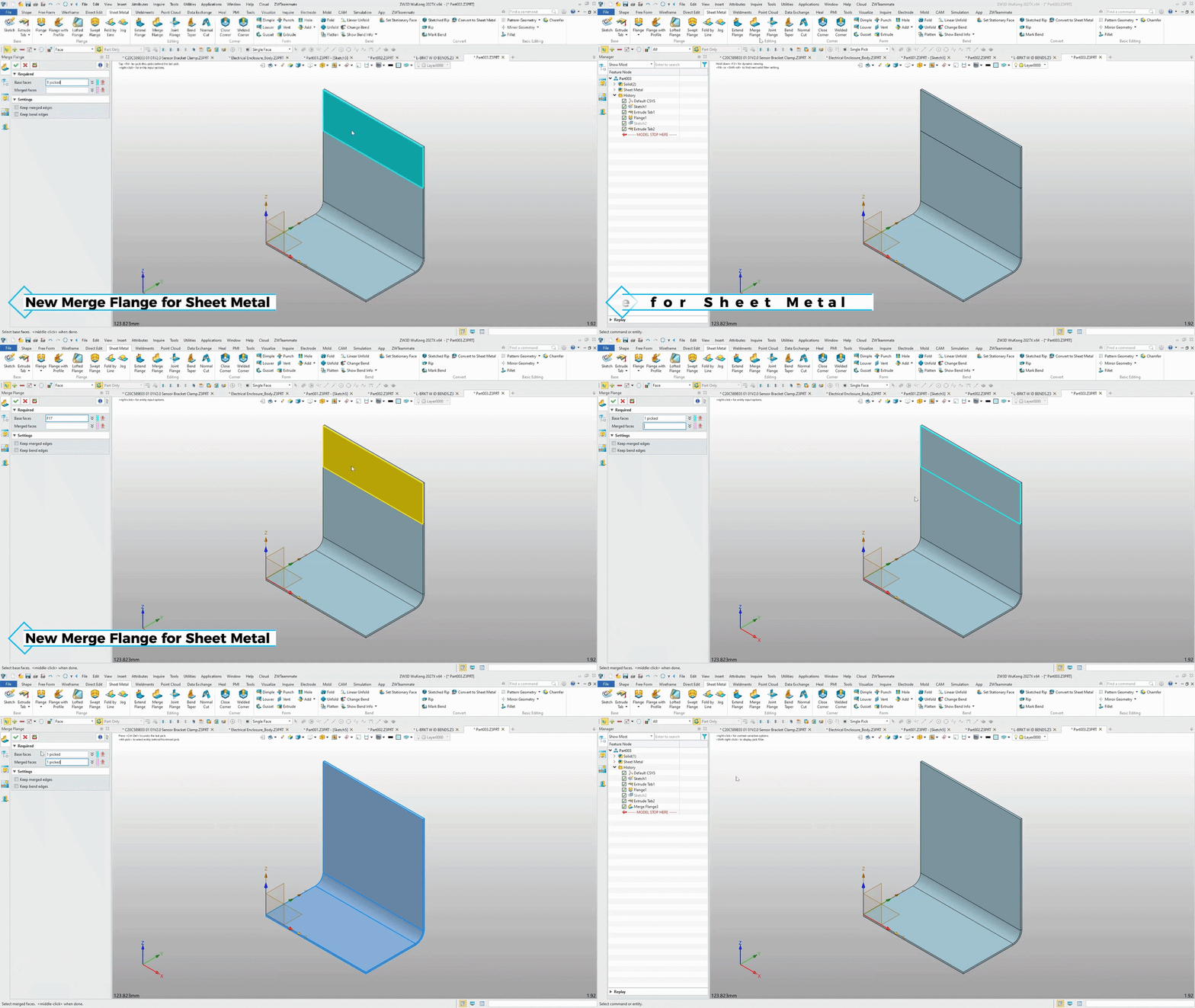
Together, these updates make the sheet metal environment more flexible and should reduce some of the manual work required when preparing complicated designs.
ZW3D WuKong 2027 introduces a new Measurable Section View that allows engineers to add PMI and measure directly within section views.
When working with individual parts, engineers can inspect internal geometry, measure dimensions, and add PMI directly to the section view. This makes it easier to verify design details without switching between different tools.
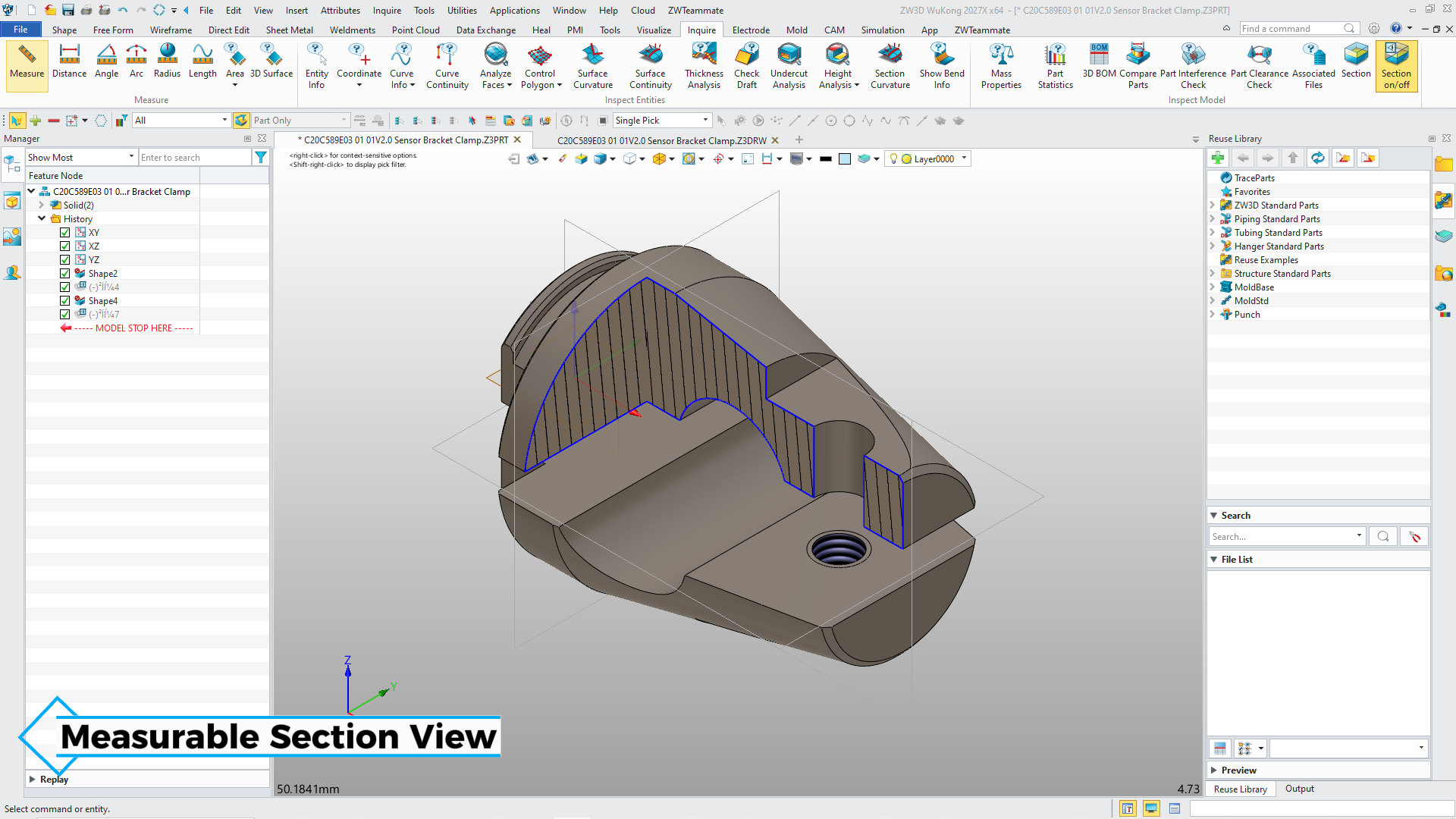
For assemblies, section views help engineers inspect how components fit together, check clearances between parts, and measure distances between internal components. This is particularly useful when validating complex mechanisms and verifying component relationships during assembly design.
Even though 3D modeling is now a key part of design, 2D drawings are still very important in manufacturing.
A finished 3D model often needs production drawings with views, dimensions, annotations, and other manufacturing information. Creating these drawings manually can take a lot of time, especially when working with large assemblies containing many components.
ZW3D WuKong 2027 includes an upgraded Auto-Drawing function designed to reduce manual work. It helps engineers generate 2D drawings from both individual parts and assemblies. When working with an assembly, you can generate multiple 2D drawings in a batch, making the drawing process faster and more efficient. ZWSOFT says the improved Auto-Drawing workflow can save nearly 80% of drafting time under its test conditions.
The actual time savings will depend on the model and drawing requirements. Simple parts may need only a few adjustments, while complex production drawings may still require dimensions, tolerances, GD&T information, notes, and manual checks.
Overall, this feature can help engineers spend less time creating drawings and more time checking important design details.
ZW3D is also a CAD and CAM solution, so it is important to look at what has changed on the manufacturing side.
ZW3D WuKong 2027 introduces new Chamfer Debur and Point Curve operations, along with improved Stepover control for Z Constant and Region Mill. These updates give CAM programmers more control over toolpaths and help streamline machining workflows from design to manufacturing.
Overall, ZW3D WuKong 2027 brings some interesting improvements. I believe the new parametric engine and large assembly performance are the most significant updates, while automatic drawing generation and the new modeling tools offer additional productivity benefits.
To learn more about ZW3D and try it free for 30 days, use the link below. Explore ZW3D & Start Your 30-Day Free Trial

