How many times have you designed a flawless CAD assembly, only to watch the physical implementation on the shop floor turn into a stressful cycle of adjustments, collisions, and delayed timelines? If you have spent any time in mechanical design or production engineering, you know this frustration all too well. There is often a massive disconnect between the pristine digital environment of CAD and the chaotic reality of physical assembly lines, robotics, and automation logic.
This exact challenge was recently highlighted in an insightful interview on the 3DS Blog with Prof. Adam Słota from the Cracow University of Technology. He pointed out a glaring gap in how we train engineers: universities excel at teaching CAD design, but graduates often enter the workforce with little understanding of how their design decisions impact manufacturing flow, robot kinematics, or PLC automation logic. To solve this, industry and academia alike are turning to Dassault Systèmes’ DELMIA on the 3DEXPERIENCE platform to connect engineering intent directly with factory floor execution.
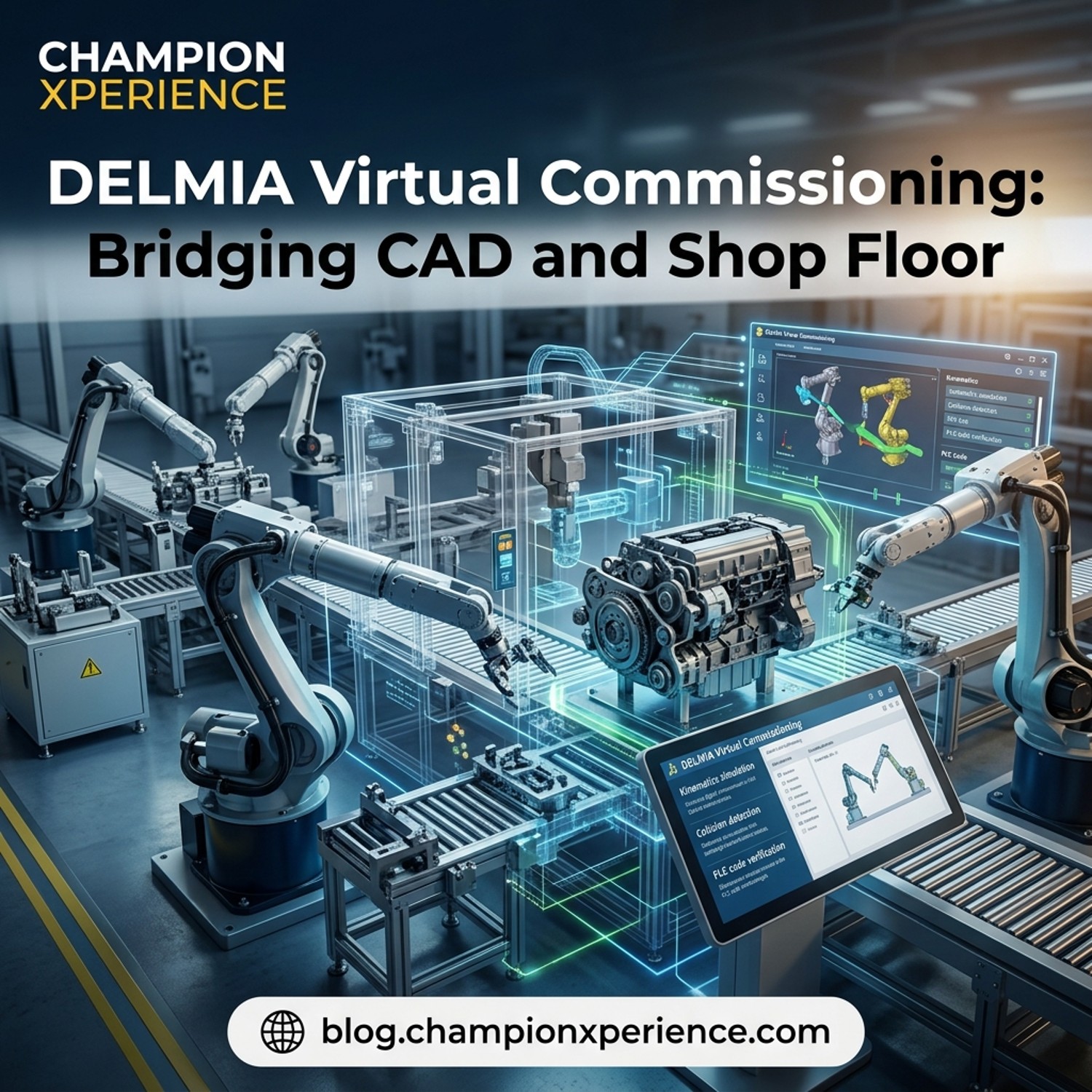
For years, a standard engineering workflow looked like this: design the product in a CAD tool like SOLIDWORKS or CATIA, hand off the 2D drawings or 3D models to the manufacturing team, and hope for the best. But modern production lines are highly automated, featuring complex robotic cells, conveyors, and smart sensors. When design engineers do not understand robot reachability, cycle times, or collision risks, the physical commissioning phase becomes incredibly expensive.
According to research from ABI Research, which ranked DELMIA Robotics as the #1 Offline Programming (OLP) solution in the market, the ability to simulate entire workflows—not just individual robots—is what sets top-tier manufacturers apart. When engineering students and young professionals learn to think beyond the static 3D model and start designing with the manufacturing process in mind, they become productive on day one. They transition from being “just” design engineers to becoming manufacturing-aware system designers.
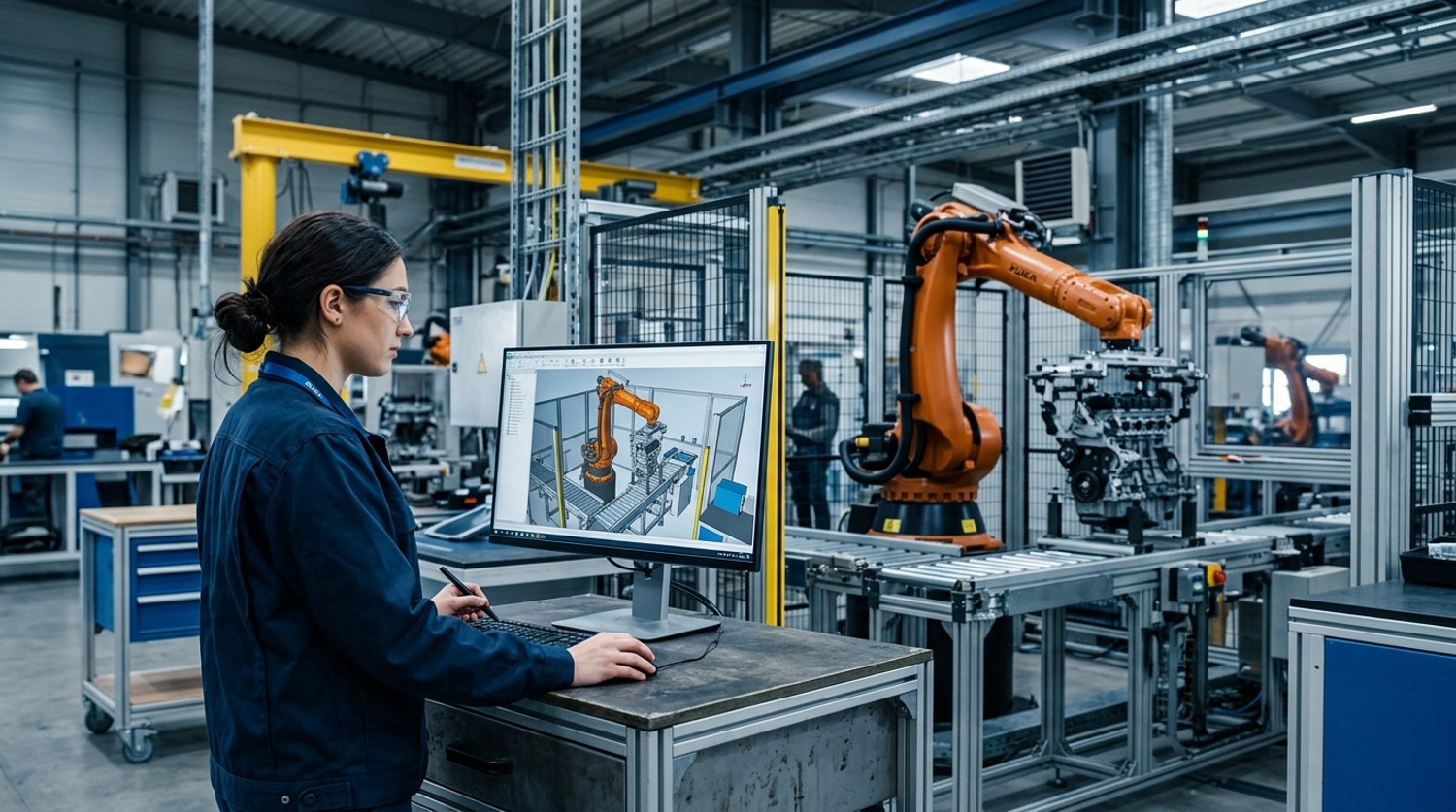
In many traditional manufacturing organizations, design, tooling, robotics, and automation teams work in isolated software silos. The design team uses one CAD tool, the robotics programmer uses brand-specific software for a particular robot arm, and the controls engineer programs the PLC in yet another environment. This fragmentation leads to duplicated work, miscommunications, and late-stage design changes that destroy profit margins.
By bringing these disciplines together inside the 3DEXPERIENCE platform, everyone works from a single source of truth. A change in the CAD model automatically propagates to the robot simulation cell, allowing the programmer to immediately check for collision risks or reachability issues.
Let’s look at how a unified environment compares to the traditional fragmented approach:
| Workflow Aspect | Traditional Fragmented Approach | Unified DELMIA 3DEXPERIENCE Approach |
| Data Continuity | Disconnected files, manual exports/imports, high risk of outdated data. | True digital thread; CAD, tooling, and robotics share the same model. |
| Robot Programming | Brand-specific software silos; programmers must learn multiple languages. | A single, brand-agnostic environment supporting over 2,000 robot models. |
| Risk Management | Errors discovered during physical installation on the shop floor. | Errors caught and resolved early in a virtual twin environment. |
| Commissioning Time | Long, unpredictable delays while troubleshooting physical hardware. | Up to 60% reduction in commissioning times through virtual validation. |
One of the most powerful concepts in modern manufacturing is Virtual Commissioning. Traditionally, testing the interaction between physical mechanics, robot movements, and PLC control logic could only happen when all physical components were bolted to the shop floor. If a sensor was placed incorrectly or a PLC logic loop failed, it meant physical damage or costly downtime.
Virtual commissioning changes the entire sequence of risk. By using a highly accurate Digital Twin within DELMIA, you can connect the virtual robot and cell models to virtual PLC controllers. This allows you to run unit testing, validate sorting logic, test safety interlocks, and optimize cycle times before ordering a single piece of physical steel. Recent industry data shows that implementing virtual commissioning can reduce physical commissioning times by up to 60%, allowing companies to ramp up production faster and with total confidence.
If you are running a high-mix, low-volume manufacturing facility, stopping a physical robot line to teach it a new path or program is a massive waste of revenue. Offline Programming (OLP) allows robot programmers to build, simulate, and validate complex paths—such as arc welding, surface finishing, or pick-and-place operations—in a virtual environment while the physical robots continue to run production on the shop floor.
Using DELMIA Robotics Offline Programming, engineers can calibrate the virtual 3D workcell to match the exact physical layout of the shop floor. This eliminates the need to manually touch up taught positions on the physical robot controller, saving hours of tedious work. While large automotive and aerospace manufacturers have leveraged these tools for years, smaller manufacturers actually benefit even more. With tighter budgets and virtually no margin for error, a single physical collision can ruin a small shop’s quarterly profitability. Validating early is their ultimate insurance policy.
The goal of modern engineering education and industrial execution is clear: deliver high-quality products efficiently, sustainably, and safely. Achieving this requires more than standalone CAD design. It demands integrated process planning, robotics simulation, and virtual commissioning. Together, these approaches help eliminate the costly surprises that often delay physical start-ups.
Are you ready to move beyond traditional design workflows? Equip your team for the realities of modern industrial automation.
This guide is based on insights from the official DS Blog .