Modern electric vehicles rely on increasingly complex thermal management systems to maximize battery performance, charging speed, and passenger comfort. As these simulation models evolve, validating every update manually becomes time-consuming and error-prone. In this article, we’ll explore how Simcenter Amesim 2604 and its Test Execution Manager (TEM) automate EV thermal model validation, helping engineering teams reduce testing time, improve accuracy, and accelerate development.
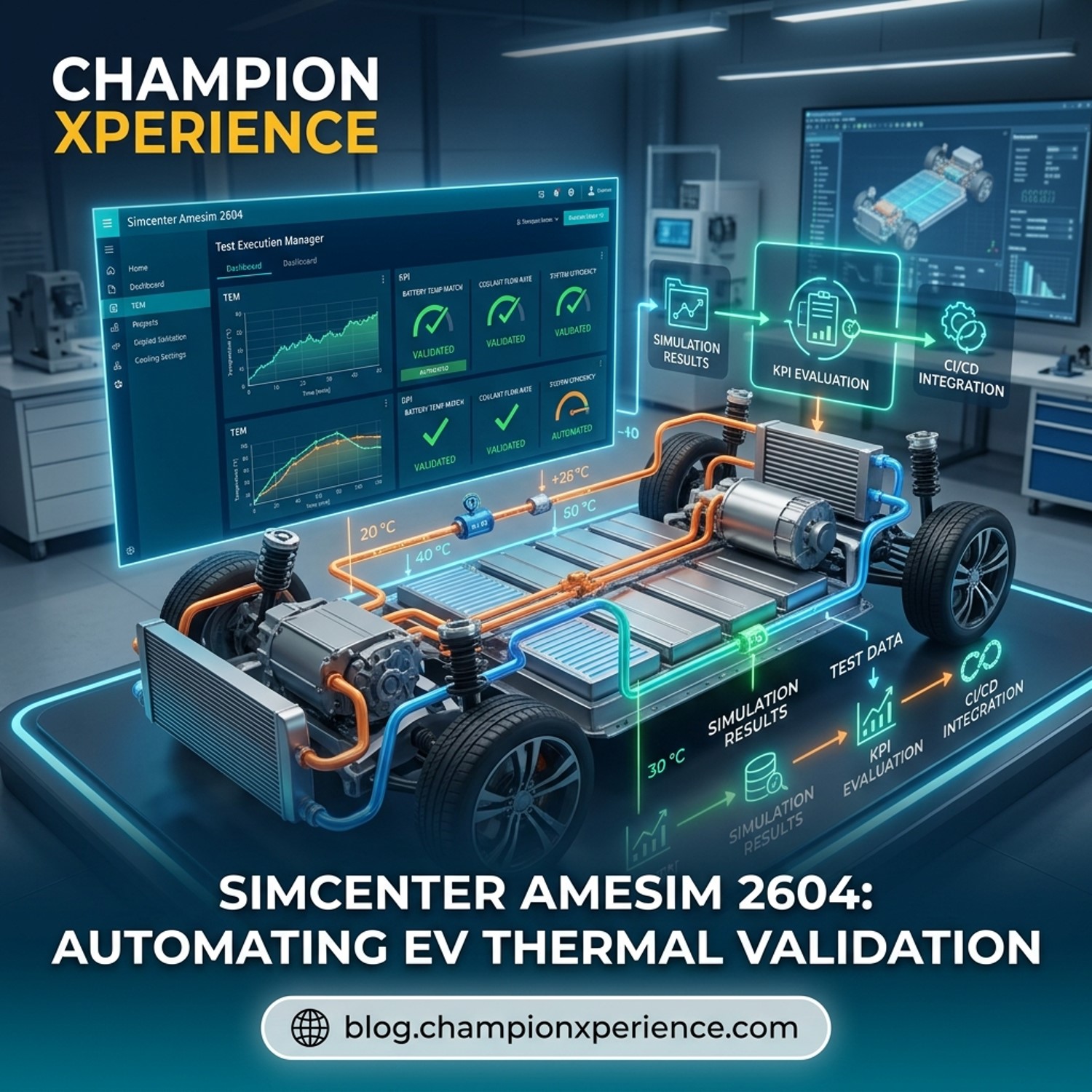
Have you ever spent hours staring at two overlapping temperature curves, squinting to see if your latest 1D system simulation model matches your physical test data? If you design cooling loops, battery thermal management systems, or cabin HVAC networks for electric vehicles (EVs), you know this frustration all too well. EV thermal management is incredibly complex, balancing battery longevity, cabin comfort, and fast-charging thermal constraints all at once.
As these simulation models grow, validating them manually becomes a massive bottleneck. Every time a library is updated, a parameter is tweaked, or a new software version is released, engineers have to re-verify their models. This tedious process slows down development and introduces human error. Fortunately, Siemens has introduced a game-changing solution to automate this process.
Traditionally, model validation has relied on visual inspection. An engineer plots the simulation results against experimental test data, looks at the curves, and makes a subjective judgment call. While this might work for a single, simple cooling loop, it quickly falls apart under the weight of modern EV architectures.
Modern EV thermal models feature hundreds of variables, transient drive cycles, and multi-domain interactions. Relying on visual checks is not only slow, but it also lacks scalability. If you have fifty different test cases to run across multiple vehicle configurations, manual validation becomes an unsustainable chore. Engineering teams need a repeatable, objective, and automated methodology to guarantee model integrity across every single iteration.
To solve this validation headache, Siemens offers the Test Execution Manager (TEM), a free add-on for Simcenter Amesim. Originally introduced to streamline non-regression testing , TEM has received major upgrades in the latest Simcenter Amesim 2604 release.
In this latest version, TEM can now run as a Windows System Tray service, allowing background execution and seamless automation . More importantly, Simcenter Amesim 2604 introduces direct comparison with previous time-series results, making regression testing during software updates incredibly straightforward. This means you can instantly verify that upgrading your software version or modifying your custom libraries hasn’t broken your legacy models.
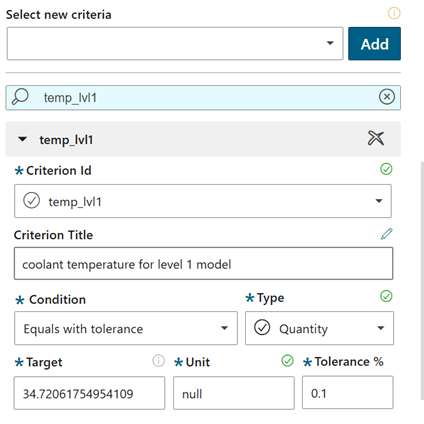
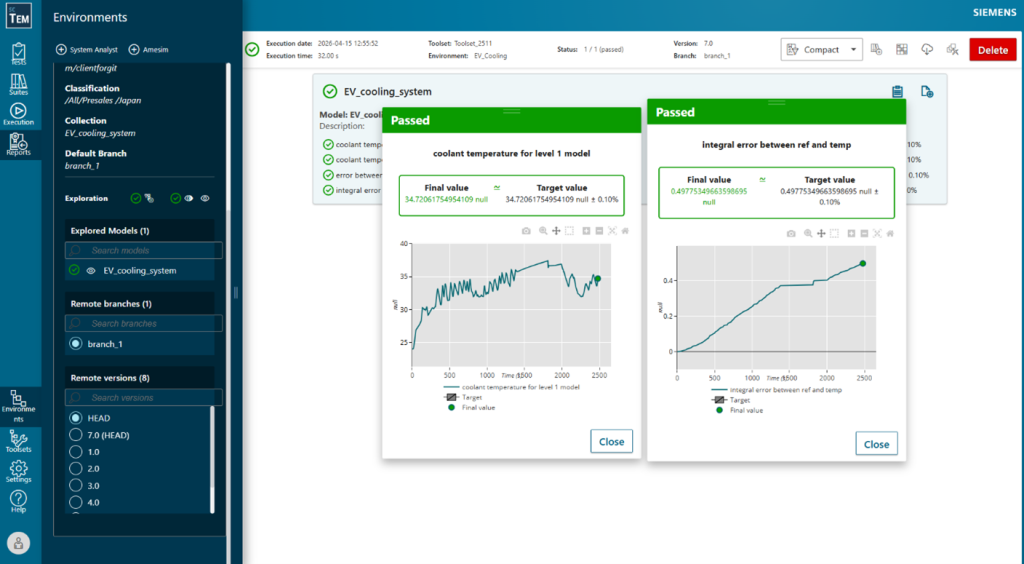
The core philosophy of TEM is replacing subjective visual validation with quantifiable Key Performance Indicators (KPIs) and strict Pass/Fail criteria. Instead of saying “the curves look close enough,” engineers define precise mathematical limits. For example, an EV cooling system model can be programmed to pass validation only if:
By establishing these strict benchmarks, you create a digital gatekeeper. If any modification pushes the model’s behavior outside these tolerances, the test suite flags it immediately.
Setting up automated validation with TEM is a structured, step-by-step process designed to fit naturally into your existing engineering workflow:
First, you configure your system model within the familiar Simcenter Amesim interface. TEM automatically scans your model, identifying post-processing variables and parameters that are ready to be used as validation criteria.
Next, you define your target KPIs. You can set up absolute tolerances, cumulative error limits, or compare current runs directly against historical time-series data to ensure consistency across model versions.
TEM takes over the heavy lifting. It runs individual simulation runs or batches of test suites automatically. Because it can run in the background as a system service, you can keep working on other tasks while your models are validated in parallel.
Once the execution is complete, TEM aggregates the results into a clean, unified report. It highlights which tests passed, which failed, and the exact magnitude of any deviations, allowing you to quickly troubleshoot problematic model areas.
To understand the sheer impact of integrating TEM into your EV development cycle, let’s look at how it stack up against traditional validation methods:
| Feature / Metric | Traditional Manual Validation | Automated Validation with TEM |
| Validation Method | Visual inspection of overlapping curves | Objective KPI thresholds & mathematical limits |
| Time Required | Hours or days of manual plotting and comparison | Minutes (up to 90% reduction in validation time) |
| Scalability | Extremely low; difficult to scale across multiple variants | High; runs automated batches across dozens of configurations |
| Regression Testing | Prone to oversight during library or software updates | Automated comparison with historical time-series data |
| Version Control | Disconnected from model repository updates | Directly integrated with Git-based workflows |
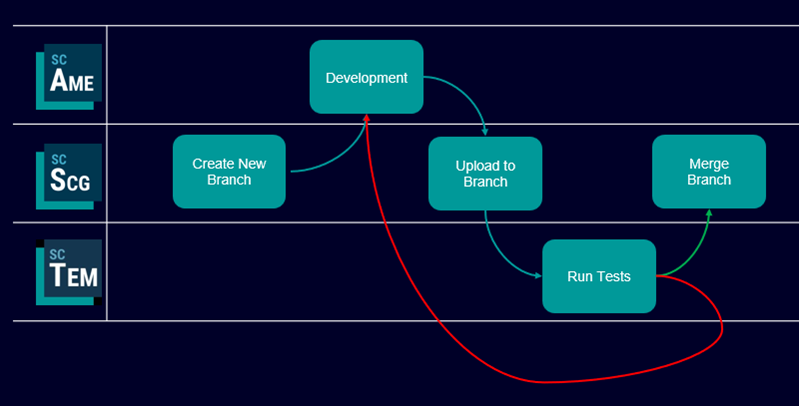
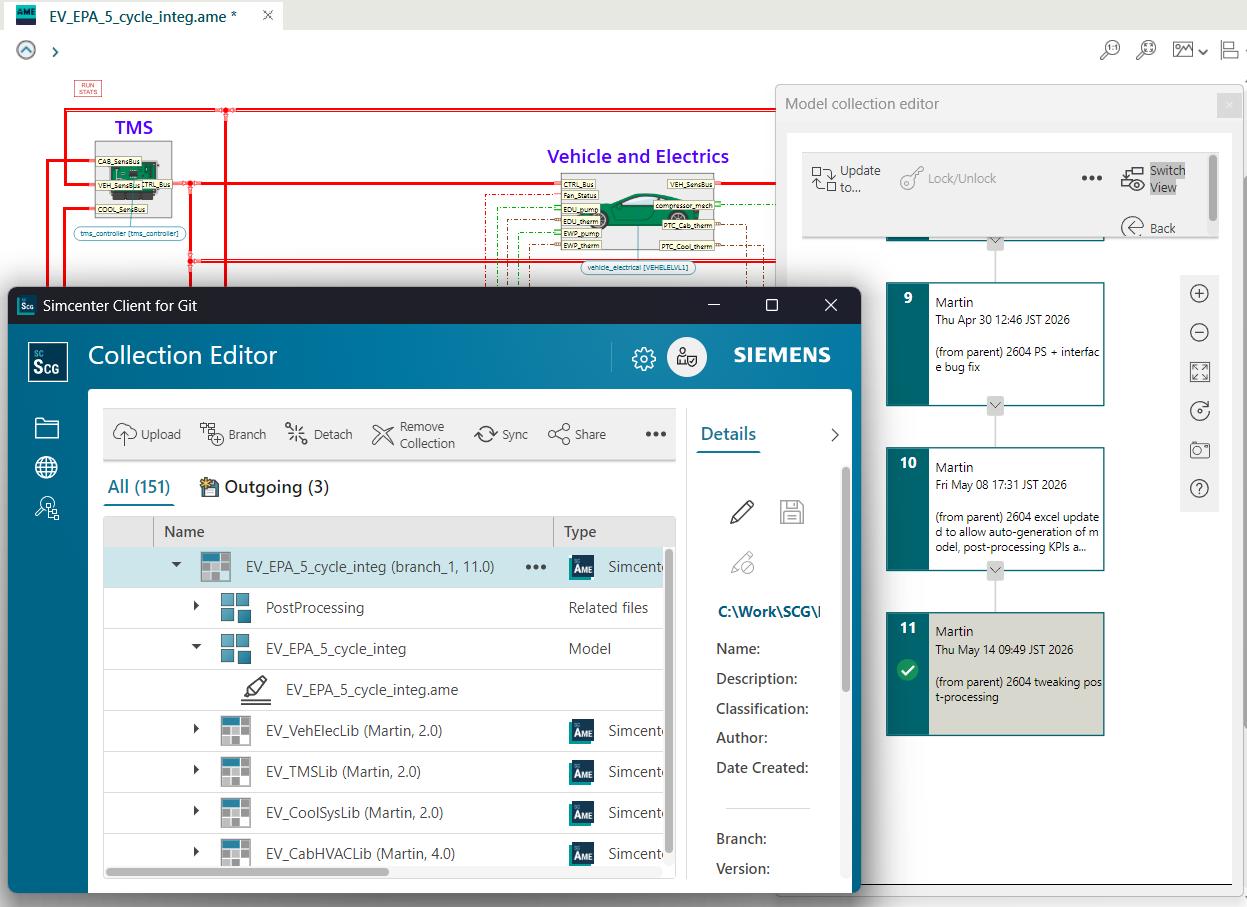
For modern engineering teams, system models are collaborative assets. TEM integrates directly with Simcenter Client for Git, creating a robust, version-controlled development environment. When an engineer develops a new branch—such as an optimized battery cooling plate design—TEM can automatically run the predefined validation suite before the branch is merged into the master repository.
If the model meets all the KPI criteria, it merges smoothly. If it fails, the system flags the branch, preventing broken or unverified models from polluting the team’s shared library. Additionally, because TEM supports command-line execution and API integration, it can be fully integrated into enterprise Continuous Integration/Continuous Deployment (CI/CD) pipelines.
By moving away from manual checks and embracing automated validation, engineering teams can maintain complete model integrity, eliminate bottlenecks, and confidently accelerate their EV development cycles.
How does your engineering team currently handle simulation model validation and regression testing? Let us know in the comments below, or subscribe to our newsletter to catch our next article on leveraging Git search capabilities for efficient model re-use!
This guide is based on insights from the official Siemens Simcenter Blog .